Using Essential Oils
Safely
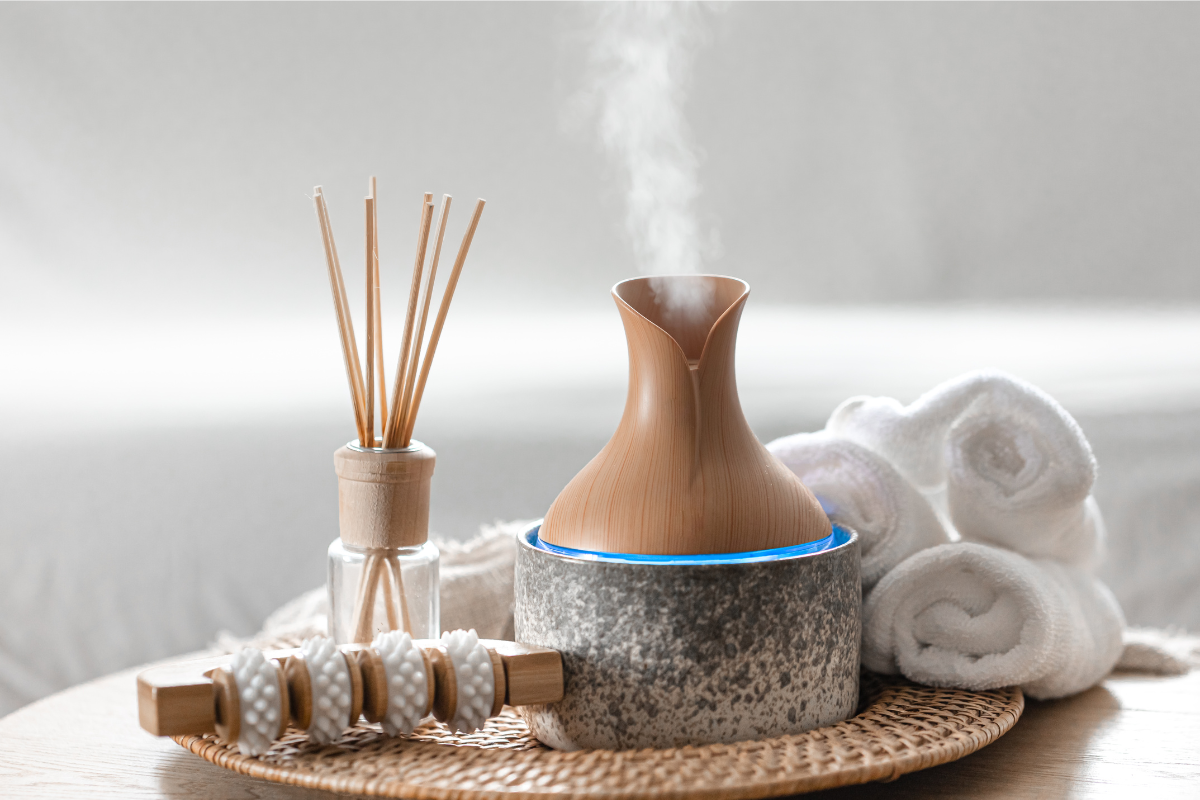
Aromatherapy has been a beloved part of my life for over 30 years. What began as a personal journey—using essential oils to care for myself and my family—quickly became a lifelong passion. We've turned to this gentle, beautifully fragrant healing art for everything from severe headaches and tummy upsets to fevers, colds, and sore muscles.
Over the years, aromatherapy became more than just a tool in my home—it became part of my professional path. Along with courses in Classical Naturopathy, Herbology and Iridology, I had the honor of teaching the Aromatherapy Specialist program at Trinity School of Natural Health, where I helped others discover the power and safety of using essential oils effectively.
Today, I continue to incorporate aromatherapy into my workshops, client recommendations, and daily life, always respecting its potency and potential for deep, natural support.
Scroll down to learn more about how you can safely use Aromatherapy for you and your family…
Beth

Topical Use

Dilution Ratios for All Ages
Diffusion
Blending
Note: Please keep all essential oils out of the reach of children and pets.
The best and safest way to enjoy your essential oils is to follow some simple guidelines:
· Change up your essential oils! Find a few favorites and rotate their use. Using different essential oils on a rotating basis will help keep you from becoming sensitized to a particular oil.
· When we become "sensitized" to any particular oil, our bodies respond with an immune system reaction. At first, this reaction could be mild, but with everyday use, reactions could become severe and potentially even dangerous.
· Always dilute your essential oils with a carrier oil. Using oils "neat", or without diluting in a carrier oil, can also lead to sensitization.
· Know which oils are phototoxic and avoid sun exposure after applying. Phototoxic essential oils can be extremely safe and beneficial as long as we avoid exposing our skin where we've applied these oils for at least 24 hours. Even better, stay out of the sun and away from U/V lights for 48 hours to prevent a reaction of the skin with these oils and the sun. You can also protect your skin by covering the applied oil with clothing. Phototoxic oils include:
o Angelica Root, Bergamot, Cumin, distilled or cold-pressed Grapefruit, cold-pressed Lemon, cold-pressed Lime, Bitter Orange, and Rue.
· Keep essential oils away from the sensitive tissue of the eyes. If you do get Essential Oils in your eyes, flush the eyes with a fatty carrier oil such as olive oil, coconut oil, jojoba oil, almond oil, or grapeseed oil. Carefully wipe the closed eye with a cloth dipped in one of these carrier oils. Afterward, flush the eye with cool water.
· Oral Use: So many people use essential oils internally these days. Please, please proceed with caution here. Essential oils used internally come into contact with the delicate tissues of the digestive tract. All oils can irritate the delicate lining of our digestive system. Some oils have very strong chemical constituents and can burn the digestive tract. Internal use of essential oils should only be used at the recommendation of a trained aromatherapist.
· Internal Use: As with oral use internal use vaginally or rectally could irritate the mucous membranes. Internal use of essential oils should only be used under the guidance of trained aromatherapists.
· Store essential oils in the refrigerator or in a cool place, away from heat and the sun, to prevent oxidation of the oils.
· Go "low and slow" when starting with essential oils. Less really is more and not just a cute quote. Just a little bit is more powerful than you may realize.
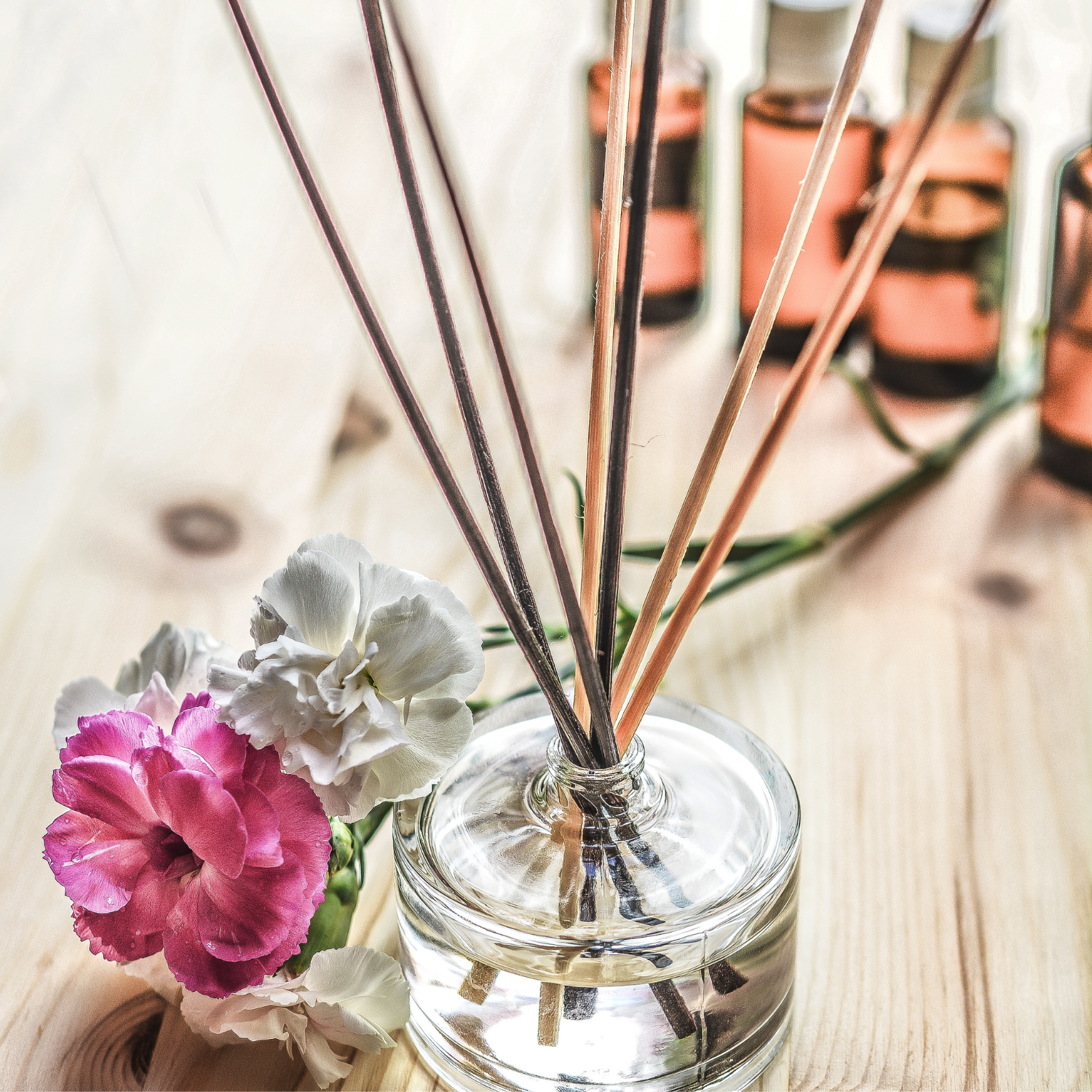
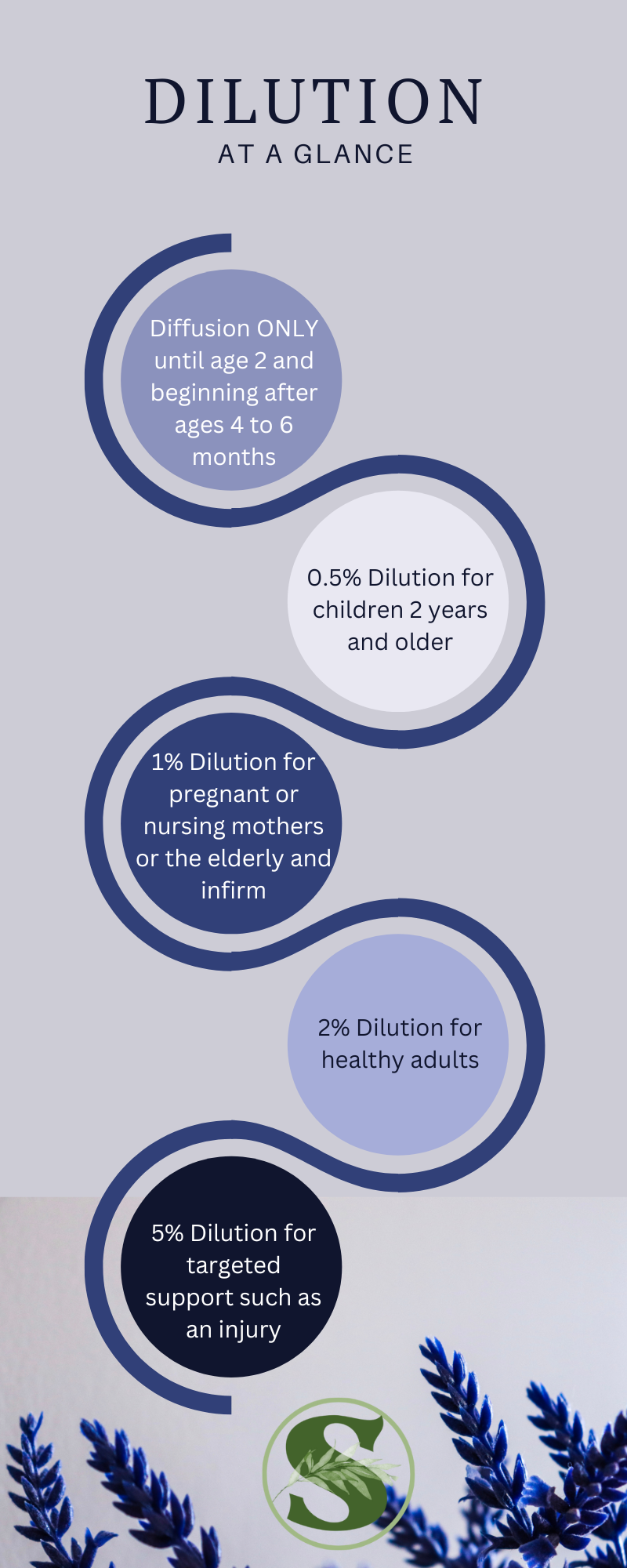
For Children: Topical use of essential oils is not recommended until the age of 2. Diffusion of essential oils can be used safely around infants from between ages 4 to 6 months. Diffusing oils in another room is so much safer for babies than having them exposed directly. For topical use, a dilution rate of 0.5% may be used in older children.
Elderly: Dilution rates of 1% are recommended for the elderly and infirm.
Epileptics: Avoid the use of Western Red Cedar, Wormwood, Genipi, Hyssop, Sage, Thuja, Pennyroyal, Buchu, Calamint, Tansy, Mugwort, Lanyana, Ho Leaf (ct camphor), Boldo, Wintergreen, Birch, Rosemary, Yarrow, Lavandin, Feverfew, and Spike Lavender.
Pregnancy: Avoid using essential oils during the first trimester. Dilution rates of 1% should be used by pregnant women and should be considered for those who are nursing. Many oils should be avoided during pregnancy. Some can be used in moderation or with restrictions. Please consult the book "Essential Oil Safety" by Tisserand and Young or a trained aromatherapist.
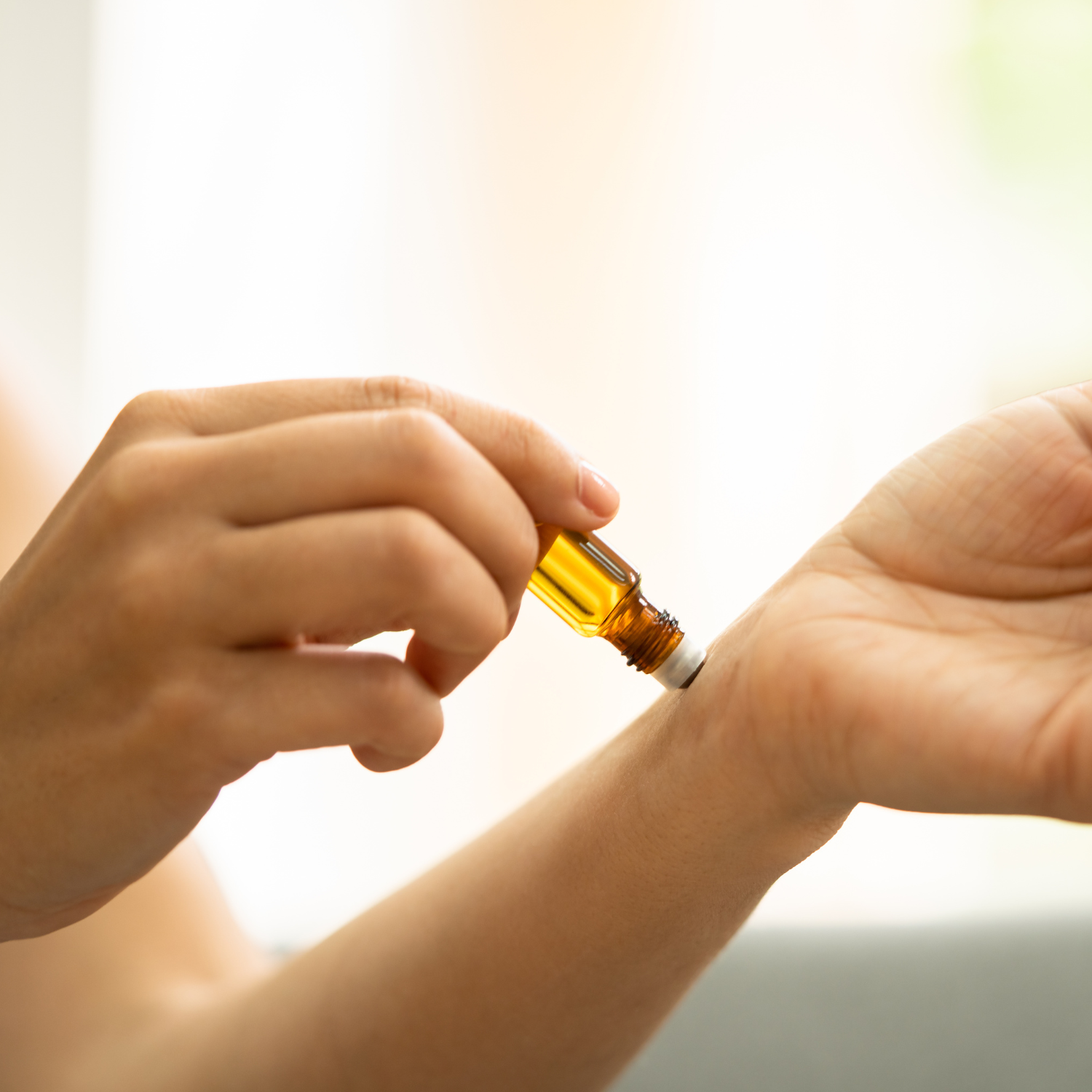
Healthy Adults: Dilution rates of 2% can be used. Please be sure to check the maximal dermal dose of each essential oil before using and when blending.
Targeted areas like muscle or joint pain in Healthy Adults: Dilution rates of up to 5% can be safely used. Please be sure to check the maximal dermal dose of each essential oil before using and when blending.
References: Tisserand, R., & Young, R. (2014). Essential Oil Safety (2nd ed.). : Churchill Livingstone Elsevier.
Suggested Reading:
The Complete Book of Essential Oils & Aromatherapy by Valerie Wordwood
Aromatherapy for Women by Maggie Tisserand
Essential Oil Safety by Tisserand & Young
Diluting Oils - Dilution Chart

FAQs
Essential oils are all-natural, right? Do I really need to dilute my essential oils?
The short answer to the question is “YES”! According to Tisserand and Young, there are many factors that contribute to the absorption of essential oils, and other chemicals, through the skin. The skin of infants is especially thin and is much more permeable than adult skin. Heavily pigmented skin is less permeable than light skin. Time of day poses a factor as well as our skin is more permeable in the evenings than during the day or in the morning. Plus, when essential oils mix with the oils of our own skin the skin becomes more permeable. The temperature of the skin, the total area of skin, the health of the skin, and the location of the skin on the body are each factors that determine how quickly and how much will be absorbed into the body.
Just because something is “all-natural” doesn’t mean it’s “totally safe”! Poison Ivy is “all-natural”, but you won’t find me rolling around in it! While that image may be a bit ridiculous, we can’t discount the power of essential oils. Safety First!
What dilution ratio should I use?
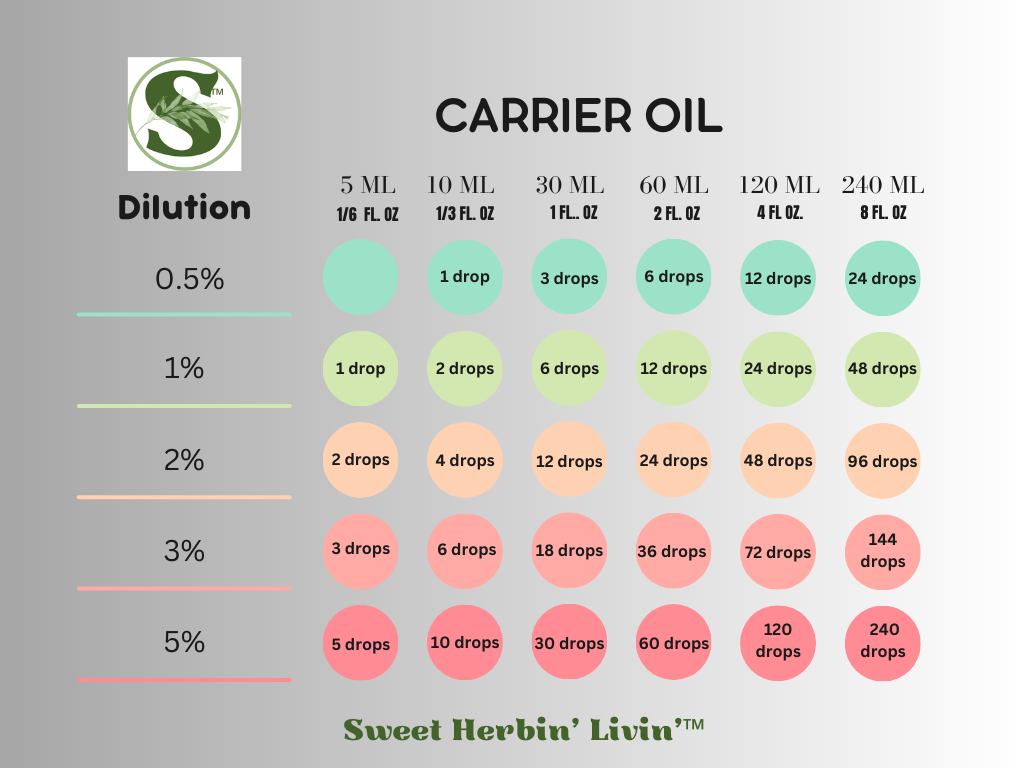
According to Tisserand and Young, “The percentage dilution for massage over a large area of skin is commonly 2% and 3%, but with a minimum of 1% and a maximum of 5%.” There are some oils that have low maximal dermal doses. Those safety guidelines shouldn’t be dismissed. The recommendations for maximal dermal dose are given based on research and evidence. Clove bud oil, for example, has a maximal dermal dose recommendation of 0.5%. That should never be exceeded.
What should I dilute my essential oils in?
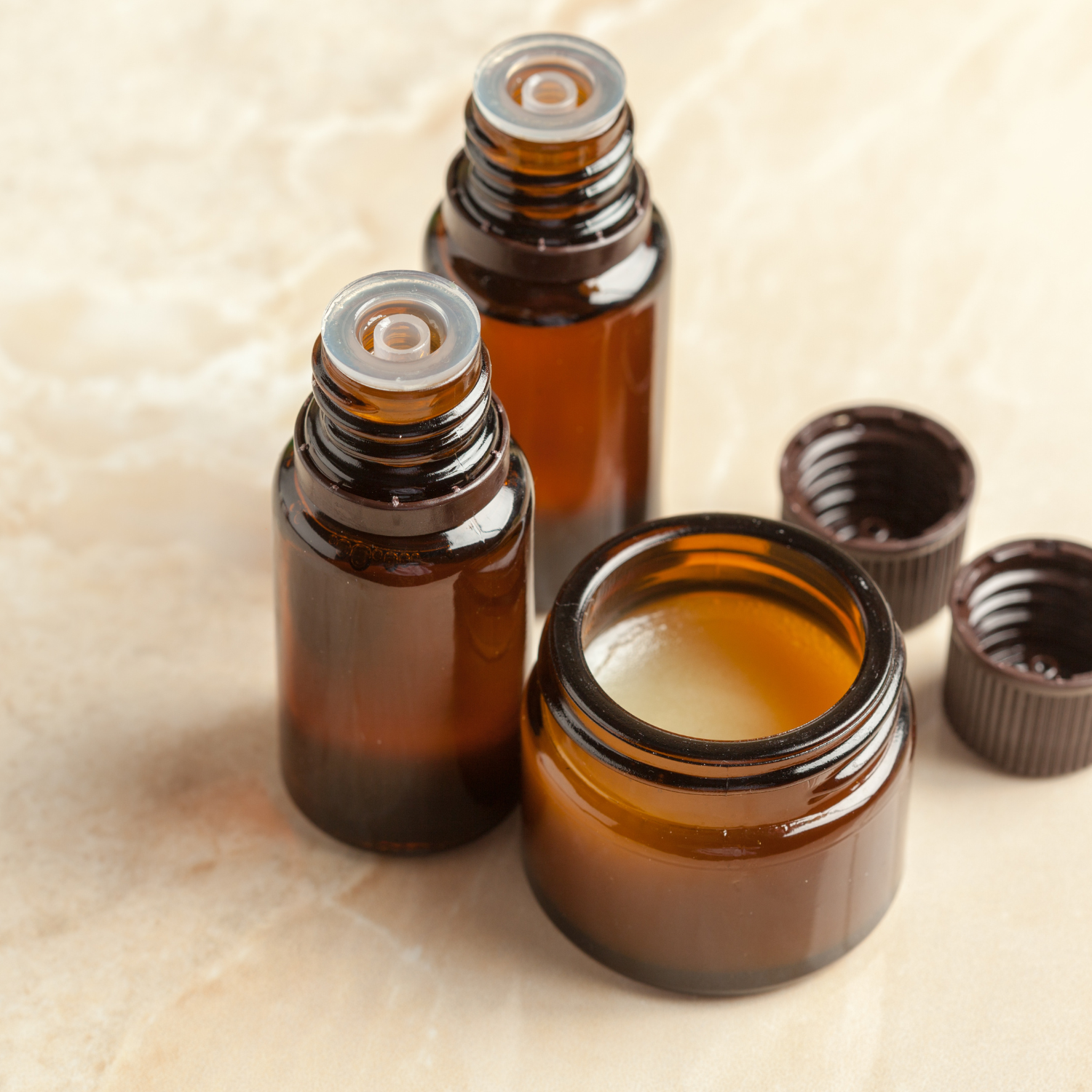
Oils used for diluting essential oils are lipid oils, or oils high in fat. We call these oils carrier oils. Carrier oils aren’t the same as essential oils but do have some health benefits of their own. Typical carrier oils used for diluting essential oils for topical use include Almond oil, Apricot oil, Grapeseed oil, Fractionated Coconut oil (FCO), and Jojoba oil. Nut butters such as Coco butter and Shea butter are also used for making salves and balms.
Aromatherapy Blogs


Quisque iaculis facilisis lacinia. Mauris euismod pellentesque tellus sit amet mollis.