High Tech vs Low Tech
What Really Builds a Strong Wellness Practice?
Let me ask you something.
When you think about your practice, do you ever feel like you’re supposed to have more… more equipment, more technology, more of those impressive tools that other practitioners are using?
Most people don’t say that out loud, but it’s there. You see someone with a full setup, screens, scans, and detailed reports, and it looks polished. It looks official. And somewhere in the back of your mind, there’s that quiet question asking whether you’re missing something or whether you’re somehow behind because you’re not doing it the same way.
That’s really what this conversation is about. It’s not just high tech versus low tech. It’s about comparison, confidence, and understanding what actually makes your work effective.
Before we go any further, I want to be really clear about something. I am not anti high-tech. I use both in my own practice. I use an iridology camera, I use muscle response testing, I use pH analysis with urine and saliva, I have access to labs when I need them, and I also use the AO scan through Solex. So this isn’t coming from a place of choosing one side over the other. I embrace both. I see value in both. And I think that’s important to say up front.
I’ve worked with both sides of this, often at the same time, and over the years, I started to notice something that shifted how I see all of it.
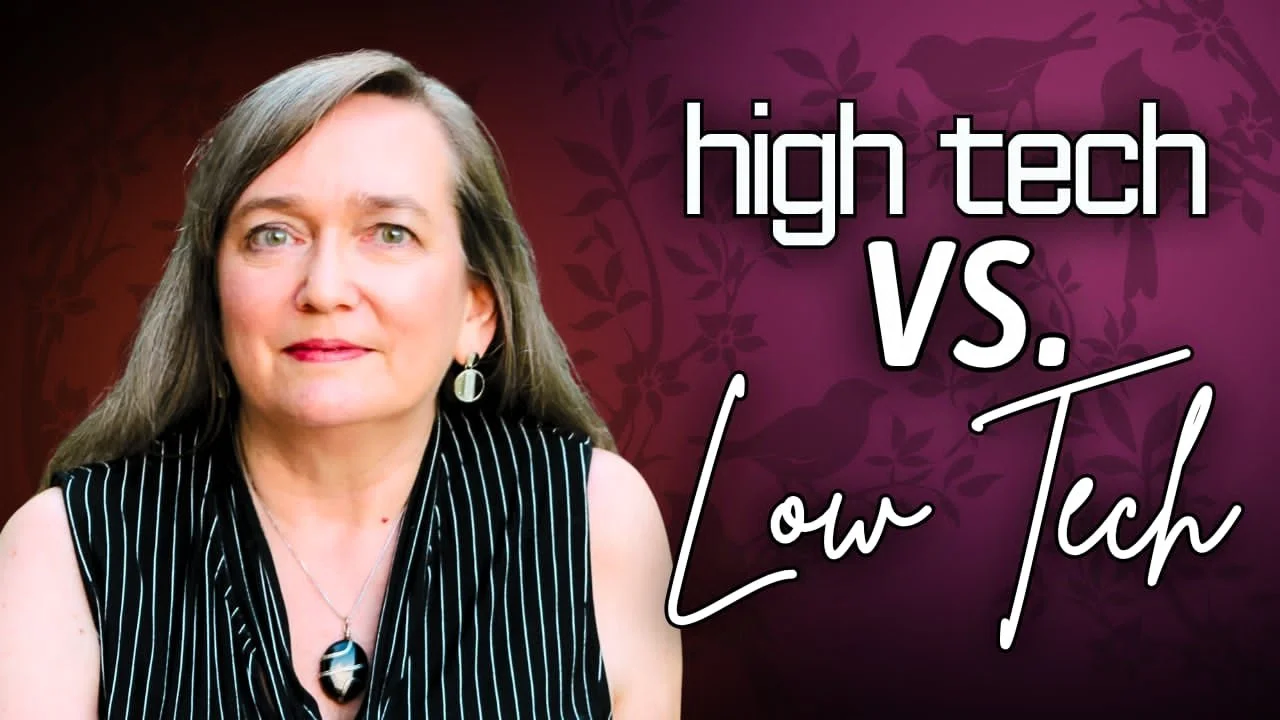
If you’d rather listen to this conversation or watch it unfold, I’ve shared the full video here.
High tech does have real benefits. It gives you data that people can see and respond to. We live in a world that likes numbers, that likes something measurable and visible, and for some clients, that matters a great deal. When they can look at a report and see that something is low or elevated, it gives them a sense of clarity and reassurance. It helps them trust the process because it feels grounded in something concrete.
At the same time, I began to notice how easily the focus can shift when everything revolves around a report. The conversation starts to center on the numbers instead of the person. Clients want to go line by line, understanding every detail, and before long, the time you’re spending together is less about their habits, their lifestyle, and what is actually contributing to their situation, and more about interpreting what the system produced.
That’s where I started to feel a disconnect. Because no matter how advanced the equipment is, it doesn’t replace the foundational questions. What are they eating? How are they living? What is happening in their day-to-day life? Are they under stress? Are they resting? Are they overwhelmed? Those answers don’t come from a machine. They come from conversation.
And that’s where low tech begins to stand out in a very different way.
When you’re working without relying heavily on technology, you engage with your client differently. You pay attention to things you might otherwise overlook. You notice how they carry themselves when they walk into the room. You see their posture, their breathing, the expression on their face, the tone in their voice. Over time, you start to recognize patterns that don’t show up on a report but are absolutely part of their health picture.
It also changes how you listen. Without the distraction of screens or data, you’re more present. You’re not trying to interpret something external; you’re focused on the person in front of you. And that presence builds a level of trust that no piece of equipment can create on its own.

That doesn’t mean low tech is always easy.
It asks more of you.
It requires you to develop confidence in what you’re seeing and sensing, and it means you can’t lean on numbers to validate your observations.
For some clients, that can feel less convincing, especially if they’re used to a more clinical or data-driven approach. They may come in comparing you to another practitioner who used advanced tools, and that can feel like pressure if you’re not grounded in what you offer.
What helped me work through that was experience. There was a season when I was using both approaches side by side, running high-tech scans and also doing low-tech analysis. What I found, consistently, was that the results aligned far more often than not. The same areas needed support. The same patterns showed up. The same underlying issues were present.
That was a turning point for me, because it made it clear that the value wasn’t coming from the machine itself. The value was in the understanding of what was being observed. The technology could present it in a certain way, but the insight behind it was not dependent on the tool.
That realization took the pressure off. It allowed me to stop feeling like I needed to keep up with what others were doing and instead focus on doing what I did well.
And I think that’s where this really lands for most practitioners. It’s easy to start believing that your effectiveness is tied to what you use, when in reality, it’s tied to how you work with your client. Your ability to listen, to ask the right questions, to connect the dots, and to guide them toward meaningful change. That’s where your value is!
Clients aren’t ultimately looking for equipment. They’re looking for help. They want clarity. They want to feel understood. They want to know that someone is actually paying attention to them and not just to a set of results.
There is absolutely a place for high tech. For some practitioners, it’s a valuable addition and can serve specific purposes, especially for clients who need that kind of validation. But it isn’t the foundation of a strong practice.
You are.
If you’re working primarily with low tech, that’s not a disadvantage. It’s a different approach, and in many ways, it’s a very powerful one. It allows you to build your skills, develop your awareness, and create deeper connections with your clients. It also gives you the freedom to start where you are without waiting until you can afford something more advanced.
Over time, you may choose to add tools, and that’s perfectly fine. Or you may find that what you’re already doing is not only sufficient but effective in a way that feels more aligned with how you want to practice.
Either way, the goal isn’t to match what someone else is doing. It’s to build something that works, something that serves your clients well, and something you feel confident standing in.
So instead of asking whether you should be high tech or low tech, it might be more helpful to ask yourself how you want to show up in your practice. What kind of experience do you want your clients to have when they sit across from you? And what approach allows you to give them that consistently?
That’s the answer that will guide you forward, and it’s the one that will help you build something lasting.
If you’re building your practice and trying to find your footing in all of this, this is exactly the kind of foundation I teach inside my Business Foundations training.
