The Vagus Nerve and Cortisol: From Mobilization to Connection
Affiliate links are included in this blog. If you make a purchase using these links, I might earn a small commission at no extra cost to you. Win-Win!
If you’ve been following along in this vagus nerve series, you know by now that this nerve is at the heart of how our bodies find calm and connection. It’s like an internal highway, carrying messages back and forth between the brain and nearly every system in the body. When the vagus nerve is strong and active, it helps us shift into states of rest, repair, and connection. But when it’s struggling, we can get stuck in “go mode”, and that’s when things start to unravel.
One of the biggest areas where this shows up is in the way our bodies handle stress hormones, especially cortisol.
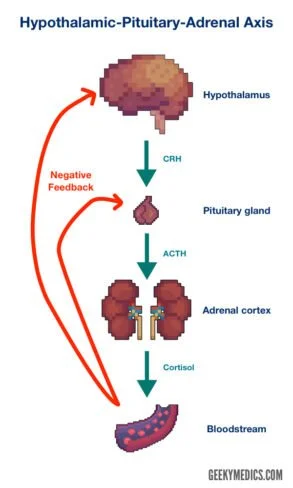
Cortisol often gets labeled the “stress hormone,” but in truth, it’s not all bad. In fact, it’s essential. When you face a challenge, your hypothalamus and pituitary glands send signals down to your adrenal glands to release cortisol. This quick release gives you the energy and focus to take action. That’s why cortisol is such an important part of the “mobilize” response. It gets you moving when you need it most.¹

The trouble comes when that mobilization doesn’t shut off. Imagine a car with the gas pedal pressed down all the time and no brakes to slow it down. That’s what chronic cortisol looks like in the body.
Instead of rising and falling naturally, levels stay elevated. Over time, this wears down your immune system, messes with your sleep, throws your metabolism off balance, and even makes it harder to regulate your emotions.²
This is where the vagus nerve steps in. You can think of it as the braking system for your stress response. When your vagus nerve is active, it signals safety to the body. Heart rate slows down, digestion kicks back in, and cortisol production eases off.³ Research shows that the vagus nerve even communicates with the hypothalamus itself, the control center that tells the adrenal glands when to release cortisol. By influencing those signals, the vagus nerve helps keep your stress response from running out of control.⁴
Even more fascinating is that science is uncovering what’s called the “vagal–adrenal axis.”
This is a direct line of communication between the vagus nerve and the adrenal glands themselves. That means the vagus nerve doesn’t just calm stress indirectly; it may also help fine-tune hormone release right at the source.⁵
Image sourced from Geeky Medics
But here’s the hard truth: when life pushes us into chronic stress—whether it’s trauma, inflammation, poor sleep, or just the pace of modern living—the vagus nerve loses its tone. It doesn’t fire as strongly, which means the brakes on cortisol don’t work as well. Instead of moving in and out of healthy mobilization, we get stuck there. The body stays revved up, adrenals keep pumping out stress hormones, and we start feeling the toll. Anxiety, brain fog, low energy, digestive issues, and that wired-but-tired feeling are often signs of this imbalance.⁶
Many people call this state “adrenal fatigue.” While the adrenals don’t technically burn out, they do get overtaxed. It’s like asking them to sprint mile after mile without rest. Eventually, the whole system struggles, and symptoms show up everywhere—from inflammation to poor sleep to mood swings.⁷
The good news is that the cycle can be reversed. By intentionally strengthening vagal tone, we can help the body remember how to reconnect and regulate. Simple daily practices like slow, diaphragmatic breathing, humming or chanting, splashing your face with cold water, walking in nature, gentle movement such as pilates or dancing, or simply sharing a belly laugh with someone you love, all feed the vagus nerve. Over time, these small signals of safety teach your nervous system to ease off the gas pedal and let the brakes do their work.⁸
Natural Support for Calming Cortisol and Strengthening Connection
Alongside nervous system practices, there are also natural remedies that can help restore balance to the vagus nerve, adrenals, and cortisol levels. These supports don’t replace the inner work of breath, rest, and connection, but they can provide nourishment and resilience as your body relearns its rhythms.
Herbal Allies for Nervous System Support
Adaptogen herbs are especially helpful here since they support the body’s ability to adapt to stress without overstimulating the adrenals. When your adrenals are under constant pressure, herbs can provide the steady support your body craves.
Ashwagandha
Ashwagandha is one of the best herbs for calming the nervous system while strengthening the adrenals. It helps reduce feelings of overwhelm, supports restful sleep, and can ease the constant “wired but tired” state many people live in. If stress leaves you exhausted but unable to fully relax, Ashwagandha may be a good fit.Holy Basil (Tulsi)
Holy Basil is often called the “stress herb” because of the way it steadies mood and brings a sense of calm focus. It supports balanced cortisol levels, making it helpful if you find yourself reacting strongly to everyday stressors. Holy Basil is also uplifting, helping to shift a low or anxious mood without being overstimulating.Rhodiola
Rhodiola is a wonderful herb when fatigue has taken hold. It boosts endurance, concentration, and resilience, especially for people who feel drained from ongoing pressure. Unlike stimulating herbs, Rhodiola strengthens without the crash, making it a steady ally for long days or demanding seasons.Lemon Balm
Lemon Balm is a gentle nervine that soothes an overactive system. If stress shows up as tension, restlessness, or poor sleep, Lemon Balm can help calm the mind and body. It’s also uplifting and works well when nervous energy seems to keep the body on edge.Cortisol Support
Cortisol Support is a combination of herbs and nutrients that aid the body’s reaction to stress and help maintain normal levels of both cortisol and blood glucose.
Gemmotherapy Remedies for Nervous System Resilience
Lime Tree/Silver Lime
Silver Lime is a remedy for those who feel nervous, restless, or overstimulated. It gently calms the nervous system, helps with anxiety, and supports more restful sleep. It’s especially useful when stress makes it hard to quiet the mind at night.Hops
Hops brings deep relaxation when the body is too wound up. It’s often used when agitation, irritability, or restlessness take over. If stress leaves you tense and unable to unwind, Hops can help shift the system into a calmer, more settled state.Wild Oats
Wild Oats are deeply nourishing for the nervous system, especially in times of depletion. When long-term stress has left you drained, Wild Oats can help rebuild reserves and restore vitality. They’re often called on when someone feels “burned out” and in need of replenishment.White Willow
White Willow helps clear inflammation that builds up under chronic stress. By easing this inflammatory burden, it supports both the nervous and adrenal systems in recovering balance. It’s a helpful choice when stress feels like it’s taking a toll on the whole body.Dog Rose
Dog Rose works with the fear and anxiety that keep the body in a constant state of alert. It helps reduce lingering fears that wear on the nervous system and contribute to tension. For those who find their stress tied to worry or apprehension, Dog Rose can be especially supportive.Walnut
Walnut is a powerful ally in times of transition. It provides resilience and adaptability, helping the body and mind adjust to change without becoming destabilized. Whether the stress comes from a move, a new job, or shifting life circumstances, Walnut offers a steadying influence.
Bach Flower Essences for Emotional Ease
Aspen
Aspen helps with vague anxieties and fears that come without a clear cause. It’s for the person who feels uneasy or “on edge” much of the time, without knowing why. Aspen restores a sense of inner calm and trust.Mimulus
Mimulus is for specific fears — things you can name, like fear of illness, financial trouble, or public speaking. It brings courage and quiet confidence, helping you face challenges with greater steadiness.Rock Rose
Rock Rose is the essence for acute fear or panic. It helps when adrenaline spikes suddenly, during moments of intense anxiety, fright, or shock. This flower essence is helpful for those who may feel “frozen with fear” and unable to move forward. Rock Rose brings grounding and courage in these high-stress states.Cherry Plum
Cherry Plum is supportive when there’s fear of losing control — of emotions, behavior, or even the mind. It encourages trust and calmness, easing the pressure that comes from holding everything inside.Red Chestnut
Red Chestnut helps when worry for others becomes overwhelming. Constant concern for loved ones can drain your own strength; this remedy helps release that weight, restoring trust that others will be okay.
Flower essences and gemmotherapy remedies may sometimes come from the same plant, but they work in very different ways.
Flower essences are vibrational remedies. They don’t contain measurable amounts of the plant itself but instead capture the energetic imprint of the blossom. This makes them especially helpful for shifting emotional patterns, calming fears, and restoring balance to the nervous system.
Gemmotherapy remedies, on the other hand, are made from the young buds and shoots of plants, which are rich in growth factors, minerals, and phytonutrients. These extracts act more physically in the body, supporting organ function, drainage, and regeneration at a cellular level, yet also supporting the nervous system and emotions.
While flower essences help us release stuck emotional responses, gemmotherapy remedies nourish and support the body’s physiology. Used together, they complement one another beautifully—addressing both the emotional and physical sides of stress and healing.
And this is the real key: healing doesn’t come from fighting stress or trying to avoid it. Stress is part of life. Healing comes from building enough vagal resilience that your body can say, “I’m safe now,” and bring cortisol levels back into balance. That’s how we restore the rhythm of mobilization and connection—and that’s how we reclaim peace, energy, and health from the inside out.
As we care for our bodies and nervous systems, it’s comforting to remember that true safety comes from resting in God’s presence. Pausing to breathe, reflect, and feel His care reminds our nervous system that it’s safe to relax, to settle. Combined with the support of herbs, gemmotherapy, and flower essences, this awareness helps us move from constant stress into calm, connection, and restoration—spirit, mind, and body.
References
Wikipedia contributors. (2025). Hypothalamic–pituitary–adrenal axis. In Wikipedia. https://en.wikipedia.org/wiki/Hypothalamic%E2%80%93pituitary%E2%80%93adrenal_axis
Raleigh Health & Wellness Center. (n.d.). The vagus nerve: A key to health and healing. Raleigh Health & Wellness. https://raleighhwc.com/the-vagus-nerve-a-key-to-health-and-healing
Inspired Change Wellness. (n.d.). Vagus nerve and cortisol. Inspired Change Wellness. https://inspiredchangewellness.com/vagus-nerve-and-cortisol
Reddy, S., et al. (2021). The vagus nerve regulates the HPA axis by inhibiting CRF neuron activity in the PVN. bioRxiv. https://www.biorxiv.org/content/10.1101/2021.06.03.446790v1
Komegae, E. N., et al. (2018). Vagal afferent fibers innervating the adrenal gland: A novel pathway regulating systemic inflammation. The Journal of Comparative Neurology, 526(17), 2888–2904. https://doi.org/10.1002/cne.25656
Biomedica Nutraceuticals. (n.d.). The vagus nerve: Connecting the mind and body. Biomedica. https://www.biomedica.com.au/the-vagus-nerve-connecting-the-mind-and-body
Neville, A. (n.d.). How vagus nerve stimulation heals adrenal fatigue. Dr. Andrew Neville. https://drandrewneville.com/vagus-nerve-stimulation-healing-adrenal-fatigue
Debbie Potts. (n.d.). All about the vagal nerve. The Low Carb Athlete Podcast. https://debbiepotts.net/all-about-the-vagal-nerve
A. Rad. (n.d.). How the adrenal axis works. Geeky Medics. Retrieved August 26, 2025, from https://geekymedics.com/how-the-adrenal-axis-works/ Geeky Medics
Tiwari, P., & Yadav, S. (2023). Ashwagandha (Withania somnifera) in stress management: A review of clinical and preclinical evidence. Journal of Herbal Medicine, 35, 101865. https://doi.org/10.1016/j.hermed.2023.101865
Cohen, M. M. (2014). Tulsi - Ocimum sanctum: A herb for all reasons. Journal of Ayurveda and Integrative Medicine, 5(4), 251–259. https://doi.org/10.4103/0975-9476.146554
Panossian, A., & Wikman, G. (2010). Effects of adaptogens on the central nervous system and the molecular mechanisms associated with their stress—protective activity. Pharmaceuticals, 3(1), 188–224. https://doi.org/10.2174/138161206779010111
Kennedy, D. O., & Scholey, A. B. (2006). The psychopharmacology of European herbs with cognition-enhancing properties. Current Pharmaceutical Design, 12(35), 4613–4623. https://doi.org/10.2174/138161206779010111
Huberle, L. (n.d.). Gemmotherapy: Silver Lime (Tilia tomentosa) extract. Lauren Hubele. Retrieved August 26, 2025, from https://laurenhubele.com/gemmo-memo-silver-lime
Huberle, L. (n.d.). Gemmotherapy: Hops (Humulus lupulus) extract. Lauren Hubele. Retrieved August 26, 2025, from https://laurenhubele.com/restoring-immunity-gemmo-memo-hops
Huberle, L. (n.d.). Gemmotherapy: Oats (Avena sativa) extract. Lauren Hubele. Retrieved August 26, 2025, from https://laurenhubele.com/restoring-immunity-gemmo-memo-oats
Flower Essence Society. (n.d.). Bach Flower Remedies: Walnut, Aspen, Mimulus, Rock Rose, Cherry Plum, Red Chestnut. Retrieved August 26, 2025, from https://www.flowersociety.org
Panossian, A., & Wikman, G. (2010). Effects of adaptogens on the central nervous system and the molecular mechanisms associated with their stress—protective activity. Pharmaceuticals, 3(1), 188–224. https://doi.org/10.2174/138161206779010111
