Herbal Salves & Oil Infusions
Affiliate links are included in this blog. If you make a purchase using these links, I might earn a small commission at no extra cost to you. Win-Win!
Herbal use abounds these days, and most of us tend to use herbal tinctures, capsules, and teas internally and reap tremendous rewards in feeling better and supporting our health.
Herbalist Phil Fritchey said that oils used topically are 70% more effective than those used internally.
While we don’t want to give up using oils internally, we DO want to take advantage of the wonderful benefits of using oils topically. Topical tinctures, ointments, and salves are easy to make at home. Here are just a few possible herbs and essential oils you can use to make DIY blends. Use them all or select a few!
Breathing and lung support -
Herbs - fenugreek seed, comfrey root, mullein, lobelia
Essential oils - eucalyptus, wintergreen, peppermint, camphor, thyme
Injuries, bruising (bruised ribs), varicose veins, sprains, or localized tremors -
Herbs - white oak bark, comfrey, gravel root, marshmallow, shave grass, black walnut leaves, wormwood, mullein, oat straw, lobelia, skullcap
Essential oils - birch and thyme
Insect repellent salve and to soothe bites and stings -
Herbs - catnip, tansy, pennyroyal, eucalyptus, garlic, yarrow, calendula
Essential oils - lemongrass, eucalyptus, lavender, tea tree, bergamot, cajeput, peppermint, neem
Antifungal salves -
Herbs - olive leaf, Artemesia, pau d’ arco, black walnut hulls, clove, yellow dock root, aloe leaf, licorice root, oregano, ginger
Essential oils - lavender, tea tree, eucalyptus
Antiseptic salves that help with skin issues of all sorts including eczema, dry skin, abrasions, burns, cold sores, and hemorrhoids -
Herbs - comfrey root, plantain, chaparral, yarrow, mullein, yellow dock root, myrrh gum, goldenseal, red clover, turmeric root
Essential oils - Lavender, frankincense
You can also make oil infusions using single herbs such as cayenne, arnica, calendula, and St. John’s wort!

The herbs and essential oils and their uses shared in this and other blogs, in our YouTube videos, and on our other social media channels are based on traditional and historical uses and are not meant to be taken as medical advice.
It is up to you, the creator and user of the herbal remedies to investigate the healing actions of each herb and oil to determine if it is right for you and your family.
Great resources include Phil Fritchey’s book Practical Herbalism and The Modern Herbal Dispensatory by Thomas Easley and Steven Horne.
Once you decide which herbs you want to use, the next step is to make an herbal infusion.
When using dried herbs, you will want to use the Cold Oil Infusion recipe.

When using fresh herbs, the Hot Oil Infusion recipe is the way to go.
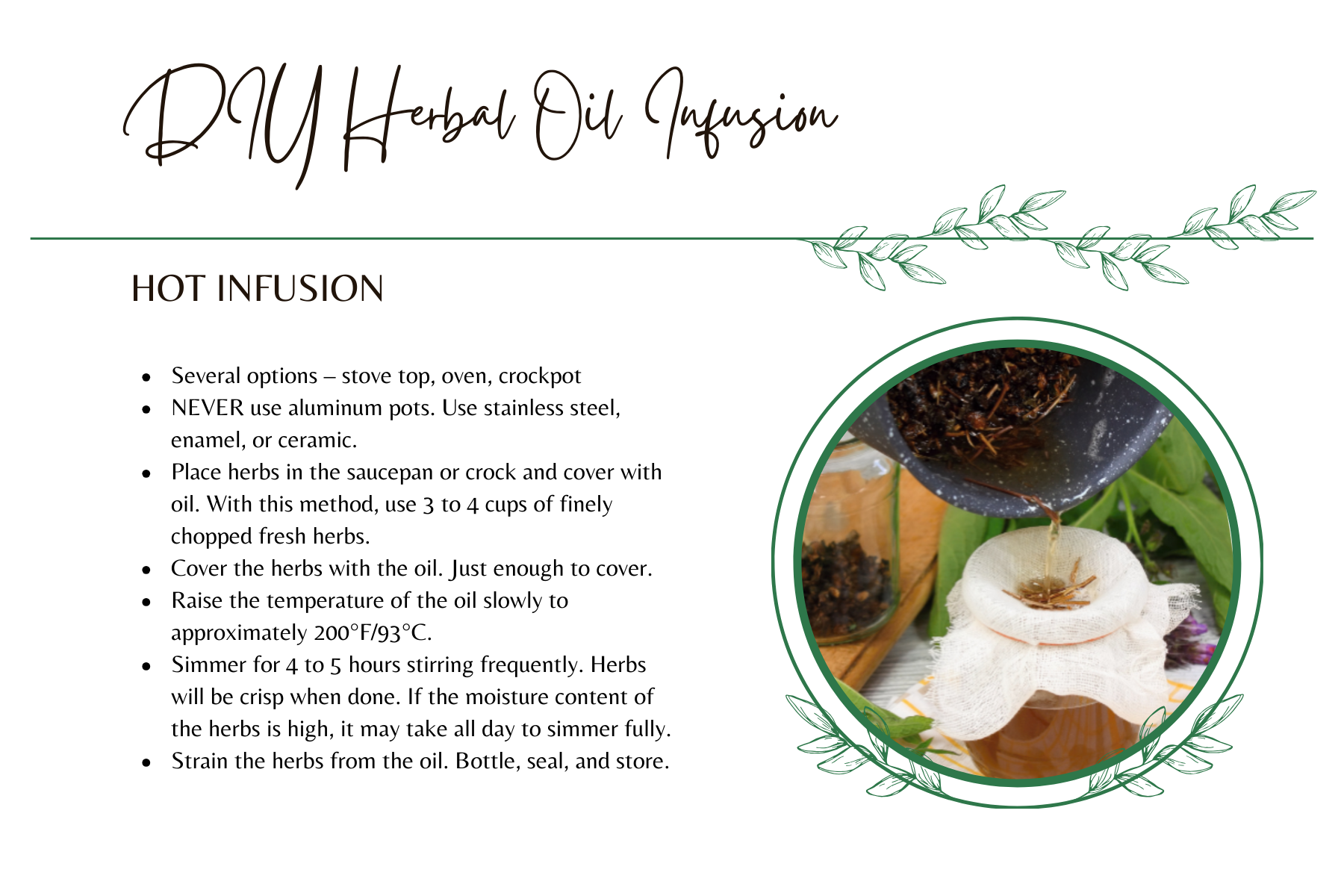
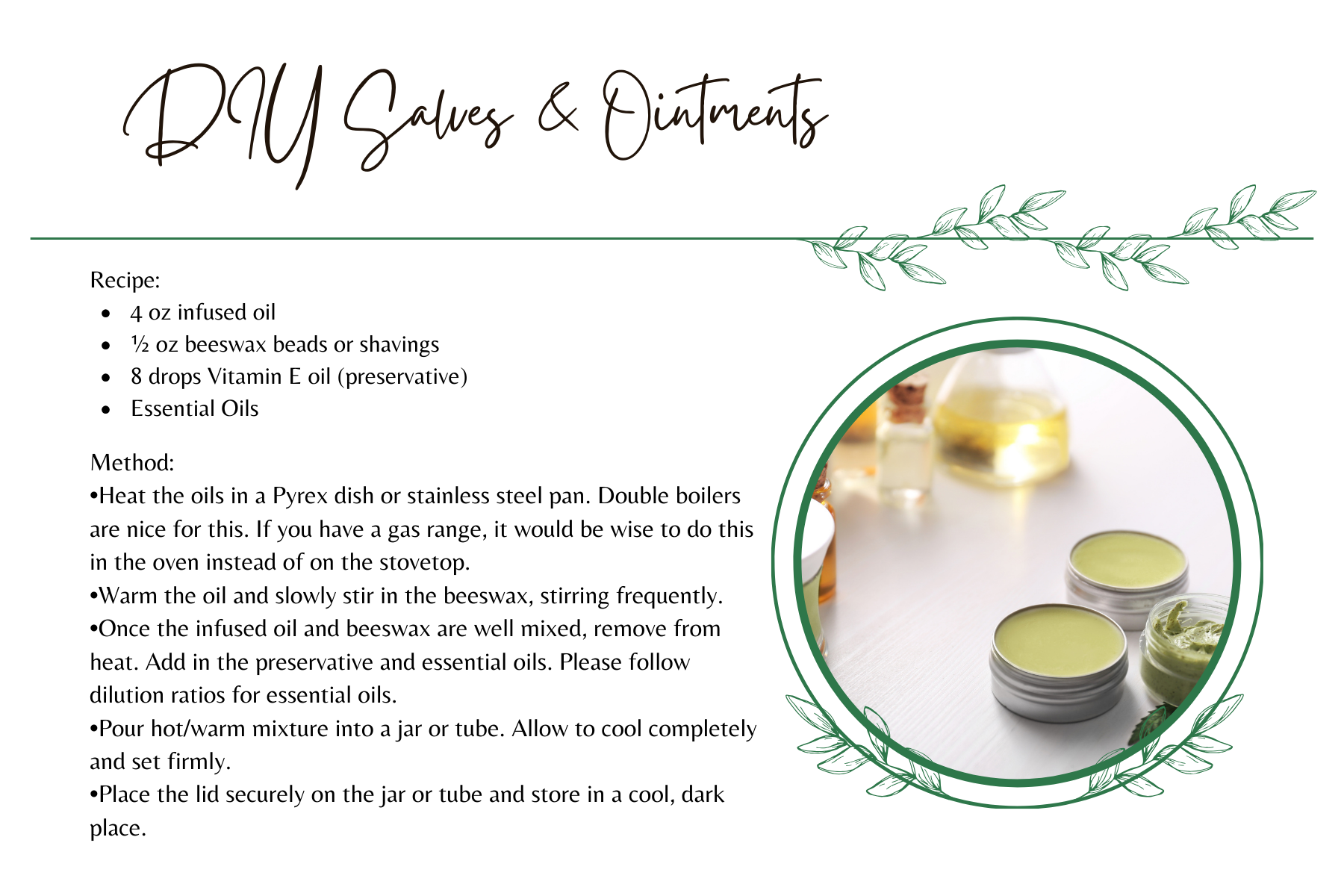
In this YouTube video, I use calendula cold-infused oil and cayenne cold-infused oil to create different herbal salves.
While at one of our Brilliant Health Weekend Away Herbal Boot Camp events, we made Cayenne and Cat’s Claw salve. Mr. Sweet LOVES this one.
Check out our Essential Oil Diffusion Chart HERE
Recipes adapted from Practical Herbalism by Philip Fritchey.
🌷Oils Beth used from Young Living. Use code SHAREYL and save 10% OFF for new signups.
🌷Oils Beth used from Nature’s Sunshine Products. Use Code NSP and save 25% OFF for new signups.
🌷Oils Beth loves from Pure Shemen Products
SHOPPING LIST:
🌟Ground Cayenne Chili Pepper 90,000 Hu, 1-Pound Bulk
