The Great Mullein Rescue
Mullein –
It seems to grow everywhere, except where I want it!
This page contains affiliate links. Thank you so much for your support!
The benefits of the herb mullein are extraordinary, at least in my mind. Mullein is known to be a pain reliever, even a “pain killer” according to famous herbalist Dr. John Christopher.
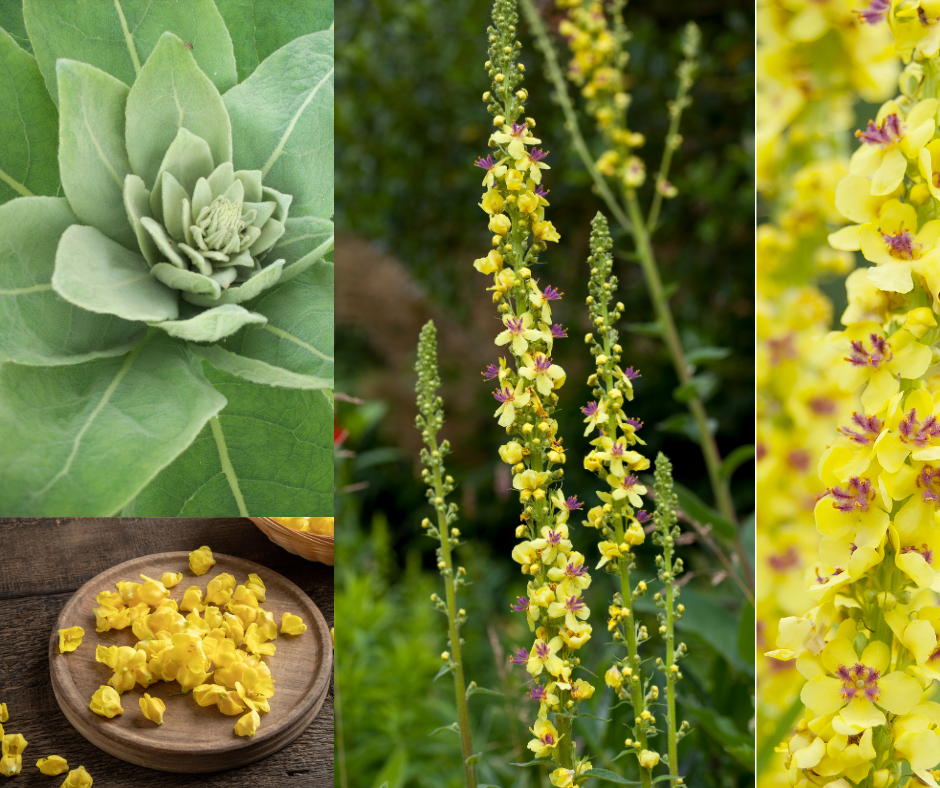
I typically think of White Willow when I think of herbals that help with pain, but Mullein is known to quiet and calm inflamed nerves too.
It’s also great when dealing with lung issues such as coughs, colds, and flu. It has a strong affinity for the lungs and the respiratory system. It helps with the digestive system and strengthens the bowels.
And it seems to grow everywhere in the United States and it thrives in poor soil and neglect. Neglect!
Several years ago, when we had chickens, I noticed this very tall plant growing in the “back 40”. Okay, so we only have less than 4 acres and we don’t really have a “back 40”. But it’s like one day out of the blue this very tall plant just appeared. At the time, I wasn’t into identifying weeds and I didn’t wonder about their benefits, so I wasn’t too excited about this strange looking plant growing in my yard.

It wasn’t until later when I was learning about mullein as an herbalist that I realized I had GOLD growing in my yard.
I was excited and disappointed all at the same time. Now that I knew the benefits of mullein, it was nowhere to be found!
Fast forward a few years and once again, I discovered mullein growing in my yard. But the lawn guy mowed it down before I could do anything with it. A year later, more popped up, but this time, I was READY! I transplanted my mullein into pots and moved them to my front stoop, where it rained on them and drowned them. Apparently, I gave them the wrong kind of neglect.
Imagine my utter delight when just the other day, I went out to check the culinary and medicinal herbs I had planted in my retainer garden in front of my house and noticed a small mullein plant among the grass that had started growing in the bed.
Was I excited? You betcha! I can’t leave the mullein where it was growing as it was too close to an azalea plant. As I discovered, mullein might thrive under neglect, but only a certain kind of neglect! The lawn guy was scheduled to come and I had to do something fast otherwise I knew he would take his weed eater to the grass and the mullein both.

The day before he was set to come manicure our lawn, I grabbed my gardening trowel and a pot for planting and went to rescue my Mullein. As I rounded the corner of the flower bed, I noticed another, smaller Mullein plant. You guessed it. I rescued them both! I haven’t decided where I will transplant them to yet, as I want to choose the right spot.
Rescued Baby Mullein
According to Phil Fritchey, “Mullein is a strong self-sowing biennial that is relatively easy to grow, loves poor soil, and once established, thrives on neglect.”[1]
Hmmm, I think the key for me is getting my mullein established in the ground.
Fritchey goes on to say that the leaves harvested from the first year’s growth are the most effective medicinally and they should be collected mid-summer before they turn brown. It looks like I’ll be harvesting my mullein leaves next year.
In the meantime, I can use mullein from trusted companies in tea, tincture (alcohol-free), or capsule form.
Mullein is also gentle and safe to use with children. Fritchey says that mullein “makes one of the very best herbs for use with children’s health problems. It combines wonderfully with chamomile, catnip, and lemon balm where appropriate and can be used to address a wide variety of childhood diseases.”

One of the best ways to use Mullein is for the ears. Mullein alone or mullein and garlic together have been used for fighting earaches for years. I love this particular blend by Herb Pharm - Mullein & Garlic for Kids.
If you want to make your own, there is a recipe below.
Mullein has been used in Europe, Asia, and by Native American herbalists for soothing inflammations such as earaches and toothaches, cramps, and for convulsions as well.
The leaves can be used as bandages and that’s exactly what they were used for during the Civil War by soldiers in the south.
Mullein has been used as an expectorant, diuretic, anti-inflammatory, nervine, anti-spasmodic, astringent, alterative, nutritive, anti-septic, anti-asthmatic, germicide, and more.
When making mullein tea from tea bags. let the leaves steep for 10-15 minutes. You can also use loose mullein if you prefer using your own tea infusers. Three to four ounces of tea can be taken frequently throughout the day to help clear the lungs and soothe the throat and cough. Tinctures may also be used to support the lungs and respiratory system and can be taken to calm the nerves and help with digestion. If you prefer capsules, those are also available. The capsule delivery system can also help with the lungs, nerves, and digestion. In fact, using mullein in tea form, tincture, or in capsules can be beneficial for the glands, the lymphatic system, the skin, and the urinary system as well.
The parts of the plants used include the leaves, flowers, and roots and they can be used fresh or dried.
Make your own ear oil with this recipe:

Shopping List: Mullein Flowers, Wide-mouth Pint Jars, Dropper Bottles 1 ounce, Dropper Bottles 2 ounce, Cheesecloth
[1] Fritchey, P. (2004). Practical Herbalism (pp. 214-219). : Whitman Publications.
