The Benefits of Basil
This page contains affiliate links. Thank you so much for your support!
I grew up working in the garden each summer, a vegetable garden that is. Each summer, my sisters and brother and I would go out in the cool of the morning to pull weeds. That sounded a bit like we volunteered, didn’t it? No, we didn’t volunteer. Pulling weeds was a part of our summer chores.
We would also rake leaves to put around the veggie plants in hopes that more weeds wouldn’t grow so that we wouldn’t have so many weeds to pull. As the summer days passed, we would start picking corn, cucumbers, green beans, canteloupe, and more! It’s not how most kids and teenagers want to spend their summers. But now, I look back on that time with fond memories of spending time with my parents. I remember walking through the corn rows and my mom husking an ear of corn and taking a bite right there in the garden.
After marrying and having children of my own, I too started a vegetable garden.

I have to say that pulling weeds in the early morning hours before the sun gets too hot is very therapeutic. It’s a great time to spend praying and getting the weeds out of my heart as well away from my plants.
One of the things I had in my garden that my parents did not is culinary herbs. Herbs like basil, dill, peppermint, and oregano. Oh! And rosemary!
My kids grew up, and I began working more outside the home. Regrettably, gardening fell by the wayside. Recently, I have made some changes. And, some changes have happened to me. Together these changes have put my feet on the path back home and it came time to focus on gardening again. I knew I needed to start small as I still have many other irons in the fire. I decided to start with an herb garden including both culinary and medicinal herbs. I’m starting with echinacea, rosemary, basil, dill, lavender, spearmint, and oregano. I also bought a eucalyptus tree.
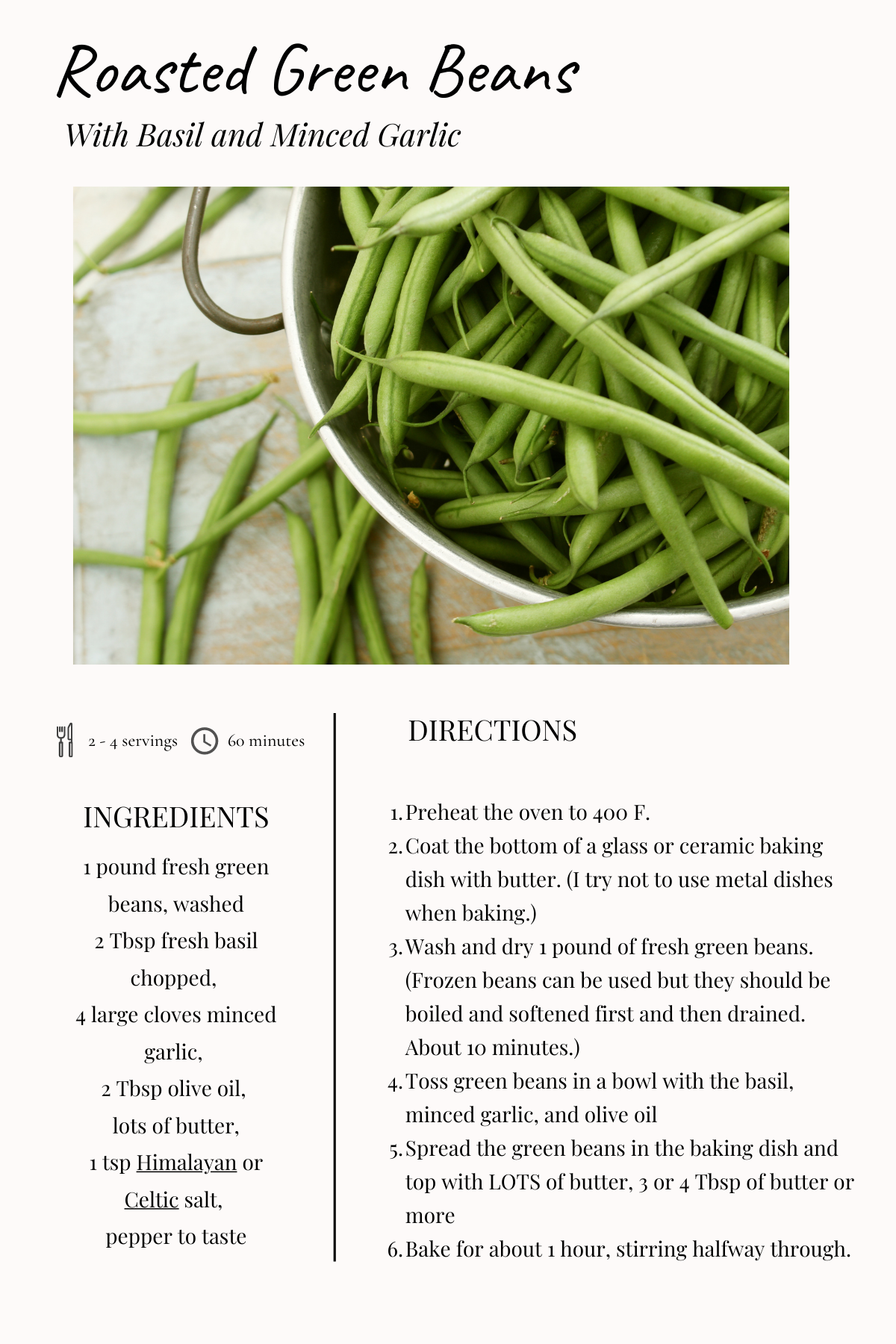
One of my favorite recipes is basil and garlic green beans. (I’ll share the recipe below.)
Click here to jump to the recipe now.
Basil is best known as a culinary herb and is used traditionally in pesto-based dishes. Sweet Basil is a member of the mint family and is known for its sweet taste. It pairs well with tomato dishes as well.
According to authors Kaefer and Milner, Sweet Basil has many health benefits. Sweet Basil has antioxidant properties, it counteracts the effect of mutagens, it is antimicrobial, and it is known to have antiviral and anticancer properties.[1]
Dr. Donald Lepore tells us that when Basil is taken internally it can help stop stomach cramps and alleviate constipation and help with digestion. Used topically, basil can be used to draw out venom from insect bites, wasp and bee stings, and snake bites as well.[2]

Making tea with Sweet Basil is easy!
If you have sweet basil in your herb garden, pick the leaves and wash them. Fill a tea infuser ball or tea infuser spoon with the basil and place the infuser in a teacup. It’s also lovely to use a teacup that comes with a strainer.
Once you have filled the infuser with fresh or dried herbs, pour water that has been brought to a boil over the infuser, about six to eight ounces. If using dried basil, you may need to use about 2 teaspoons of the dried herb and a tea infuser with small holes. Allow the herbal tea to steep for 30 minutes. Remove the strainer or infuser with the herbs from the cup and add a natural sweetener such as honey to taste.
Enjoy!
Now about that recipe I promised. Here it is!
[1] Kaefer, C., & Milner, J. (n.d.). Herbal Medicine: Biomolecular and Clinical Aspects. 2nd Edition. https://www.ncbi.nlm.nih.gov/books/NBK92774/
[2] Lepore, D. (1985). The Ultimate Healing System (p. 144). : Woodland Publishing.
