Breath: The Built-In Reset Button for the Vagus Nerve
Affiliate links are included in this blog. If you make a purchase using these links, I might earn a small commission at no extra cost to you. Win-Win!
Breathing happens without us thinking about it, yet it has the power to completely shift the way our body feels and functions. Every inhale and exhale sends a signal to the brain, either of calm and safety or of alertness and vigilance. At times, the body can slip into a state where that alertness never turns off. Hyperarousal develops when stress becomes constant, and the nervous system stays locked on high alert, unable to settle back into rest. The vagus nerve, which connects the brainstem with the lungs, diaphragm, and heart, plays a central role in that communication. When we learn to breathe in ways that strengthen the vagus nerve, we tap into one of the simplest and most powerful ways to reset our nervous system.
The Vagus Nerve–Lung Connection
The vagus nerve is the main communicator between your brain and lungs. It helps regulate your breathing rhythm and detects changes in oxygen and carbon dioxide levels. When your breathing is shallow or rapid, vagal tone weakens, and your brain interprets that as stress.
When your breathing slows and deepens, especially when the exhale is longer than the inhale, the vagus nerve strengthens its signal of safety throughout the body.
Your lungs are richly supplied with vagal fibers. When those fibers are gently stretched by slow, deep breaths, they activate a feedback loop that tells your brain to lower your heart rate, ease blood pressure, and calm inflammation. You can literally breathe your way back into balance.
How Breath Becomes a Reset
Your breath acts as a built-in switch between the sympathetic (fight-or-flight) and parasympathetic (rest-and-digest) systems.
Fast, shallow breathing keeps adrenaline active and your body on alert.
Slow, rhythmic breathing communicates safety, releasing the body’s grip on stress and tension.
That’s why breathwork can make such a difference for anxiety, fatigue, trauma recovery, and even pain. Each breath provides the vagus nerve with a rhythmic cue that it’s safe to relax, repair, and restore.
Simple Breathwork Exercises to Support the Vagus Nerve
These gentle practices can be used anytime: between appointments, before bed, or whenever your body feels tense or overstimulated.
1. The 4-7-8 Breath
For safety, please avoid using the 4-7-8 breath while driving, since its calming effect and breath retention may reduce alertness.
This simple exercise, often called “the relaxing breath,” is one of the quickest ways to restore calm and strengthen vagal tone.
How to do it:
Inhale gently through your nose for 4 counts, allowing your lungs to fill from the bottom up.
Hold that breath for 7 counts — feel the quiet pause where your body absorbs oxygen and your mind softens.
Exhale slowly through your mouth for 8 counts, letting the air flow out in a smooth, steady stream.
Repeat for four full cycles. You can increase to eight rounds as your comfort level grows.
Why it helps:
The extended exhale and brief hold activate your body’s parasympathetic response, the “rest and restore” state governed by the vagus nerve. This pattern gently lowers heart rate, stabilizes blood pressure, and invites the brain into a slower, safer rhythm.
If practiced daily, it can retrain your nervous system to recover from stress more quickly and help you fall asleep more easily. Try using it before prayer or bedtime to signal your body that it’s safe to let go.
2. Diaphragmatic Breathing
When I was in high school band, I played the flute. One of the breathing exercises my private teacher had her students do was to lie on our backs with a book resting on the abdomen. The goal was to make that book rise and fall with each breath — a simple way to be sure we were filling our lower lung capacity, not just the top of the lungs.
Many people are shallow breathers, and when they think of taking a “deep breath,” they actually lift their shoulders. That movement keeps air trapped high in the chest and prevents the lungs from expanding to their full capacity.
To practice diaphragmatic breathing, sit or lie down with one hand on your chest and one on your abdomen. Inhale slowly so your abdomen rises more than your chest, just like that book exercise. Exhale completely and feel your ribs draw inward. Repeat for 5–10 minutes to restore calm, improve oxygen exchange, and strengthen vagal signaling through the diaphragm.
3. The Sigh Breath
Think about the last time you let out a big sigh, maybe after finishing something hard or releasing a long-held thought. That sound of relief isn’t weakness; it’s your body’s natural way of discharging stress and re-centering.
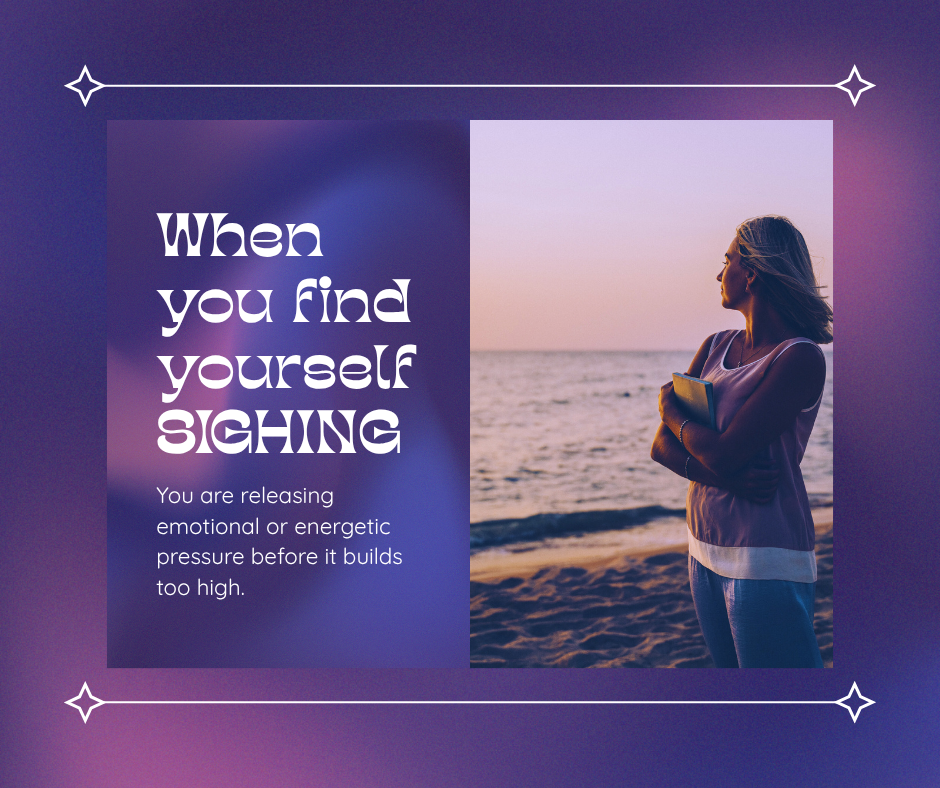
If you catch yourself sighing throughout the day, your body is likely doing its best to self-regulate. In natural health, a spontaneous sigh is often viewed as the body’s way of releasing emotional or energetic pressure before it builds too high.
💡 Did You Know? – The Fascia Connection
The diaphragm is wrapped in fascia, a web of connective tissue that links everything from your throat to your pelvis. When this fascia becomes tight or dehydrated, it can restrict breath movement and reduce vagal flow. Gentle stretching, hydration, and bodywork help free this tissue so both your breath and your nervous system have more room to expand.
In Traditional Chinese Medicine, the lungs are associated with grief and letting go, and sighing is how the body moves stagnant energy through the chest. Louise Hay described the breath as our way of “taking in life,” so when sighs come often, it can also mean the body is asking for more space, a chance to breathe in new inspiration, not just exhale the old.
Rather than trying to stop the sighs, notice them. Each one is a gift, a reminder that your body knows how to come back to balance. When they happen, take a moment to pause, slow down, and breathe a little deeper with awareness.
The Sigh Exercise - Inhale through your nose, filling your lungs slowly and evenly. Then release a long, audible sigh through your mouth. Let the exhale be generous and unhurried, the kind that softens your shoulders and unclenches your jaw.
Each sigh helps lower blood pressure, slow heart rate, and re-engage the vagus nerve’s calming branch. Physiologically, it’s like pressing a reset button for your nervous system. Emotionally, it’s a moment of surrender, exhaling the day's buildup and inviting peace to take its place.
Try two or three rounds whenever you notice tension rising. Many people find this is one of the quickest ways to quiet racing thoughts and reconnect body, mind, and spirit.
4. Humming or Gentle Chanting
Take a slow, deep breath in through your nose, allowing your lungs to fill completely. Let your ribs and abdomen expand as the air moves in. This nasal inhale filters and warms the air, supports nitric oxide production in the sinuses, and enhances oxygen delivery to your cells.
As you exhale, close your lips and hum softly, keeping the sound low and steady. You’ll feel a gentle vibration under your jaw and down into your chest. That vibration isn’t just soothing, it’s directly stimulating the vagus nerve, which passes through the throat and into the chest and abdomen.
This resonance also benefits the thyroid gland, which sits near the vagus nerve branches along the larynx and trachea. The subtle vibration helps improve local circulation and lymphatic movement, supporting thyroid health and overall metabolic balance.
You can hum a simple note, sing softly, or speak a calming phrase on each exhale. Try five slow rounds, breathing in deeply through the nose each time, and notice how your chest feels more open and your thoughts grow quieter.
Regular practice can:
Strengthen vagal tone
Improve thyroid and throat energy flow
Reduce stress-related tension in the neck and shoulders
Promote better oxygenation and emotional steadiness
This exercise combines breath, sound, and vibration, a trio that gently tunes the nervous system back toward balance and peace.
Breathwork That Can Be Done While Driving
It may be tempting to practice breathwork in the car while driving, especially if you spend a lot of time commuting or notice tension building in your body on the road. While some gentle breathing practices can be safely done behind the wheel, it’s important to choose techniques that support focus rather than distract from it. Breathwork should never pull your attention inward so deeply that it interferes with awareness of the road, so selecting the right methods matters. Breathing practices that keep your attention forward and do not alter your level of alertness are generally safe and include the following:
Slow nasal breathing (steady inhale/exhale with no breath holds)
Gentle extended exhale (exhale slightly longer than the inhale, but still natural)
Soft humming on the exhale (as long as it doesn’t require closing your eyes or changing posture)
Diaphragmatic awareness (feeling the belly rise/fall without manipulating breath intensity)
These techniques help regulate the vagus nerve, reduce tension, and improve focus without impairing alertness.
What Not to Do While Driving
Certain breathwork techniques should never be used while driving because they can cause dizziness, drowsiness, or a shift in awareness that reduces alertness. Avoid any practice that includes breath holds, long pauses, rapid breathing, forceful exhalations, or deep relaxation effects — such as 4-7-8 breathing, box breathing, or any form of breath retention. These methods can alter carbon dioxide levels or induce a parasympathetic drop that is unsafe when operating a vehicle. If you feel lightheaded, emotionally overwhelmed, or overly relaxed at any point, stop the breathwork immediately and return to normal breathing. Driving requires full attention, and breathwork should only enhance clarity and calm, never compromise safety.
The Role of the Diaphragm and Posture
The diaphragm is a dome-shaped muscle under your lungs, and is a key part of vagal signaling. A tight or restricted diaphragm limits how well you breathe and how effectively the vagus nerve can send its calming messages. Poor posture, shallow breathing, or long periods of sitting can all contribute to restriction in this area.
Gentle stretches, Pilates-style core work, or even standing up and reaching toward the ceiling for a few breaths can free the diaphragm and surrounding fascia. When the diaphragm moves freely, your lungs expand more fully, your body receives more oxygen, and your vagus nerve is consistently nourished with movement and rhythm.
Natural Supports for Better Breath and Vagal Tone
You can support healthy vagal function through natural means as well.
Hazel, Viburnum lantana, and Rosemary Gemmos each offer their own unique support for healthier, more easeful breathing.
Hazel (Corylus Avellana) is one of the primary lung remedies in gemmotherapy, helping restore elasticity to the lung tissue, improve oxygen exchange, and ease the tight, shallow breathing that often follows stress, illness, or fatigue.
Lithy Tree (Viburnum lantana) works along the respiratory passages and nervous system, relaxing the bronchi and smoothing out irregular, tension-held breath patterns. It’s especially helpful when breathing becomes tight or uneven under emotional or physical strain.
Rosemary (Rosmarinus Officinalis), while not a classic lung gemmo, supports the diaphragm and the organs connected to the breath—particularly the liver and gallbladder—while enhancing overall circulation and oxygenation. Because of its gentle stimulation of the parasympathetic branch of the vagus nerve, Rosemary can help restore a deeper, fuller breath when stress or sluggish metabolic function has made the breath feel shallow or stagnant. Together, these three remedies offer a well-rounded approach to supporting clearer, freer, and more resilient breathing.
When life feels noisy and overwhelming, Stay Calm helps the body and mind return to center. Crafted with flower allies that encourage balance, courage, and emotional steadiness, this blend supports your ability to breathe deeply, think clearly, and face each moment with confidence. Because the vagus nerve is the body’s main pathway for calming and recovery, emotional overdrive or looping thoughts can keep it on alert. Stay Calm gently quiets the stress response, helping the body shift back into its “rest-and-restore” rhythm. As tension releases, breathing deepens, heart rate steadies, and communication between brain and body becomes smoother.
Daily habits: Moderate movement, staying hydrated, getting outside air, and even laughter — yes, laughter stimulates the vagus nerve through rhythmic exhalation.
Hit the Reset Button
Your breath is your body’s built-in reset button. You can use it anytime to calm the heart, settle the mind, and remind your body that it’s safe. By breathing with awareness, you strengthen communication between your brain, lungs, and heart. Over time, that steady rhythm helps your body learn to rest, repair, and live from a place of peace rather than stress.
References
Porges, S. W. (2011). The polyvagal theory: Neurophysiological foundations of emotions, attachment, communication, and self-regulation. W. W. Norton. https://doi.org/10.1016/B978-0-12-420248-1.00002-2
Kaczmarek, L. D., Behnke, M., Paluch, K., & Hoffman, S. (2019). Rhythmic breathing as a physiological marker of well-being. Frontiers in Psychology, 10, 708. https://doi.org/10.3389/fpsyg.2019.00708
Courtney, R. (2020). Breathing pattern disorders and the vagus nerve. Journal of Bodywork and Movement Therapies, 24(1), 1–7. https://doi.org/10.1016/j.jbmt.2019.05.017
Russo, M. A., Santarelli, D. M., & O’Rourke, D. (2017). The physiological effects of slow breathing on the autonomic nervous system. BMC Complementary and Alternative Medicine, 17, 102. https://doi.org/10.1186/s12906-017-1783-2
Jerath, R., Edry, J. W., Barnes, V. A., & Jerath, V. (2006). Physiology of long pranayamic breathing: Neural respiratory elements may provide a mechanism that explains how slow deep breathing shifts the autonomic nervous system. Medical Hypotheses, 67(3), 566–571. https://doi.org/10.1016/j.mehy.2006.02.042
Calabrese, P., Perrault, H., Dinh, T. P., Eberhard, A., & Benchetrit, G. (2000). Cardiorespiratory interactions during normal exercise and exercise with inspiratory resistive loading. European Journal of Applied Physiology, 81(5), 409–416. https://doi.org/10.1007/s004210050062
Li, P., Shi, S., & Ma, X. (2023). Physiological and psychological benefits of sighing: A review. Neuroscience & Biobehavioral Reviews, 145, 105000. https://doi.org/10.1016/j.neubiorev.2022.105000
El Chami, M., Mericskay, M., & Sandoz, J. (2021). The role of nitric oxide during nasal breathing and humming. Journal of Breath Research, 15(1), 016006. https://doi.org/10.1088/1752-7163/abcfec
Bhandari, P., Govindarajan, S., & Ghosh, A. (2020). Humming and its therapeutic potential: A review of vagus nerve stimulation through vocal resonance. Complementary Therapies in Clinical Practice, 39, 101154. https://doi.org/10.1016/j.ctcp.2020.101154
Weil, A. (2011). Breathing: The master key to self-healing. Little, Brown and Company. https://www.drweil.com
Pal, G. K., Velkumary, S., & Madanmohan. (2004). Effect of short-term practice of breathing exercises on autonomic functions in normal human volunteers. Indian Journal of Medical Research, 120, 115–121. https://ijmr.org.in/article.asp?issn=0971-5916;year=2004;volume=120;issue=2;spage=115;epage=121;aulast=Pal
Chan, J. W., Fan, M. C., & Yan, B. P. (2022). The lungs and emotional regulation: Mechanistic insights into stress-induced respiratory changes. Frontiers in Medicine, 9, 834727. https://doi.org/10.3389/fmed.2022.834727
Seroyal. (n.d.). Gemmotherapy: Embryonic plant tissue extracts to stimulate organ systems and toxin elimination. https://www.seroyal.com/media/wysiwyg/seroyal/downloads/Gemmotherapy_Brochure.pdf
Revitalconcept. (n.d.). Corylus avellana gemmo. https://revitalconcept.com/products/corylus-avellana-gemmo
Riverdale Homeopathy. (n.d.). Viburnum lantana gemmotherapy 1DH. https://www.riverdalehomeopathy.com/products/viburnum-lantana-gemmotherapy
Santi-Shop. (2025). Detox gemmotherapy: Purify your body naturally. https://www.santi-shop.eu
Hubele, L. (2020). Gemmotherapy with Lauren Hubele: Hazel. https://laurenhubele.com/gemmo-memo-hazel
Braam, A., & O’Neill, K. (2019). Gemmotherapy for respiratory resilience: Clinical applications and case insights. https://gemmotherapyinstitute.com
Freedom Flowers. (n.d.). Stay Calm flower essence. https://www.freedom-flowers.com/stay-calm
