The Vagus Nerve: Inflammation & Natural Support
Affiliate links are included in this blog. If you make a purchase using these links, I might earn a small commission at no extra cost to you. Win-Win!
The “Wandering” Nerve That Connects It All
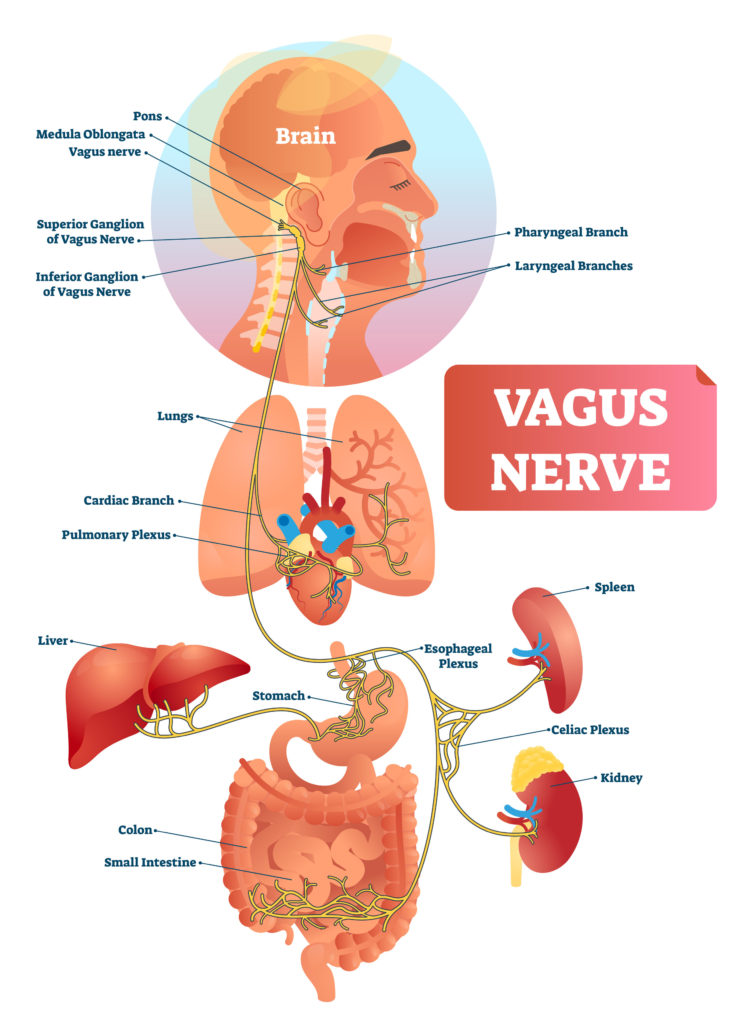
The 10th cranial nerve, the vagus nerve, earns its name from the Latin vagus, meaning "wandering." It's the only cranial nerve that extends beyond the head and neck, traveling through the body to connect the brain with key organs: heart, lungs, digestive tract, and more. From its origin in the brainstem’s medulla, it exits the skull via the jugular foramen and descends through the neck within the carotid sheath—nestled between the internal jugular vein and carotid artery—before branching through the thorax and abdomen.
This nerve isn't just for structure—it plays a critical role in sensory, motor, and parasympathetic functions, making it a foundational component of the body’s “rest and digest” mode.
The Vagus Nerve as a Switch for Inflammation
The inflammatory reflex is a neural pathway where the vagus nerve actively "turns off" inflammation. When cytokines signal an immune response, signals travel via the vagus to inhibit excessive cytokine production—essentially protecting tissue from damage. This action is part of what researchers call the cholinergic anti-inflammatory pathway, where acetylcholine binds to specific receptors on immune cells, preventing excess inflammation—a key mechanism for overall calm and recovery.
Too much stress, poor diet, negative thoughts, or toxin exposure can trigger chronic inflammation—a root factor in conditions like rheumatoid arthritis, heart disease, IBS, migraines, and long COVID—highlighting the importance of a well-functioning vagus nerve.
The Gut-Brain-Body Highway
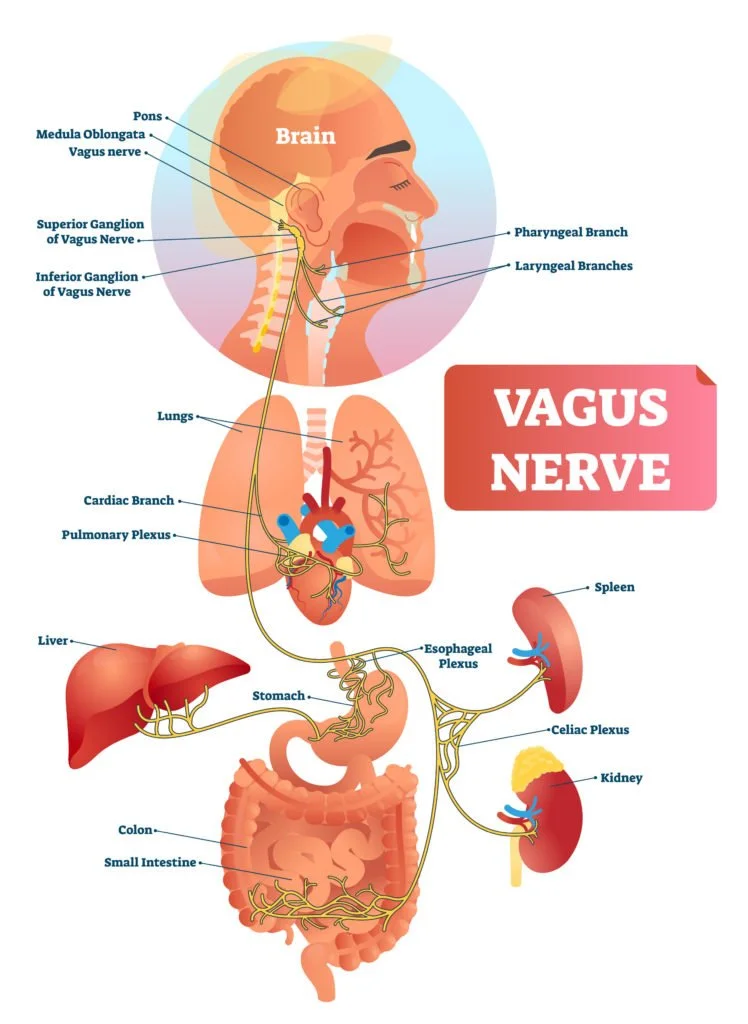
Because the vagus nerve innervates organs from the head to the colon, it supports digestion, heart rate, emotion, immune response, and more. It forms a feedback loop—the gut sends signals up to the brain, and vice versa—making it the central communication link of the gut-brain axis. Healthy vagal tone means smoother digestion, steadier mood, and a calmer stress response.
Natural Herbs Supporting the Vagus Nerve
While herbs and supplements can play a supportive role, they are not a substitute for the daily rhythms and restorative practices that truly regulate the nervous system. The vagus nerve thrives when the body feels safe and cared for, and this comes from consistent habits like quality sleep, balanced nutrition, deep breathing, prayer or meditation, and time in nurturing relationships. These practices send powerful signals through the vagus nerve that help calm the body, restore balance, and reduce stress.
Human connection is another essential piece. Research shows that the vagus nerve is deeply tied to social engagement — the way we use our voice, facial expressions, and even eye contact can stimulate vagal activity. Meaningful conversations, laughter, singing, and even simply being with people we trust provide natural stimulation to the vagus nerve, reinforcing its role in keeping us calm and resilient.
Once these foundational practices are in place, herbs and supplements can provide extra support. Think of them as allies that enhance the body’s natural capacity for healing rather than quick fixes. When combined with restorative rhythms and healthy connection, herbs such as lemon balm, holy basil, and chamomile, or nutrients like magnesium and omega-3 fatty acids, can further strengthen vagal tone, reduce inflammation, and support the body’s ability to respond to stress with balance instead of overwhelm.
While not a substitute for healing presence or restorative practices, certain herbs show promise in supporting vagal tone and calming the nervous system:
Lemon Balm: Enhances GABA activity, supporting relaxation and vagal tone.
Ginger: Soothes digestion and aids the gut–vagus connection.
Holy Basil: supports vagal tone by reducing stress hormones (like cortisol) and calming the nervous system. This adaptogenic effect helps shift the body out of “fight or flight” and into a more balanced parasympathetic state
Valerian: Improves heart rate variability (a key measure of vagal tone), aiding in stress relief and rest.
Turmeric & Ashwagandha: Anti-inflammatory and adaptogenic properties are promising for indirectly supporting vagal signaling.
Chamomile, Lavender: Their calming aroma and mild neuro-support of these and other essential oils help soothe nervous system stress and support relaxation.
How This Shapes Your Nervous System Health
Understanding this anatomy and connection isn't just academic; it empowers you to nurture your nervous system with intention. By combining breath, mindful movement, tapping, sensory nourishment, and these natural allies, you honor the body’s innate healing design. Over time, these consistent practices help lift you out of stress, calm inflammation, and cultivate deep, sustaining peace.
References
Kenhub. (2022). Carotid sheath: Anatomy, contents and clinical aspects. Retrieved July 11, 2025, from https://www.kenhub.com/en/library/anatomy/carotid-sheath Kenhub
Nature Reviews Endocrinology. (2012). The vagus nerve and the inflammatory reflex—linking immunity and metabolism. Nature Reviews Endocrinology, 8, 743–754. Nature
Pavlov, V. A., & Tracey, K. J. (2012). The vagus nerve and the inflammatory reflex—linking immunity and metabolism. Nature Reviews Endocrinology, 8, 743–754. Nature
Radiopaedia. (2024). Vagus nerve (CN X). Retrieved July 11, 2025, from https://radiopaedia.org/articles/vagus-nerve Radiopaedia
Springer. (2025). Targeting the cholinergic anti-inflammatory pathway: An innovative strategy for treating diseases. Molecular Biology Reports, 52, Article 199. SpringerLink
Frontiers in Neuroscience. (2024). Non-invasive vagus nerve stimulation in anti-inflammatory therapy. Retrieved July 11, 2025, from https://www.frontiersin.org/articles/10.3389/fnins.2024.1490300